
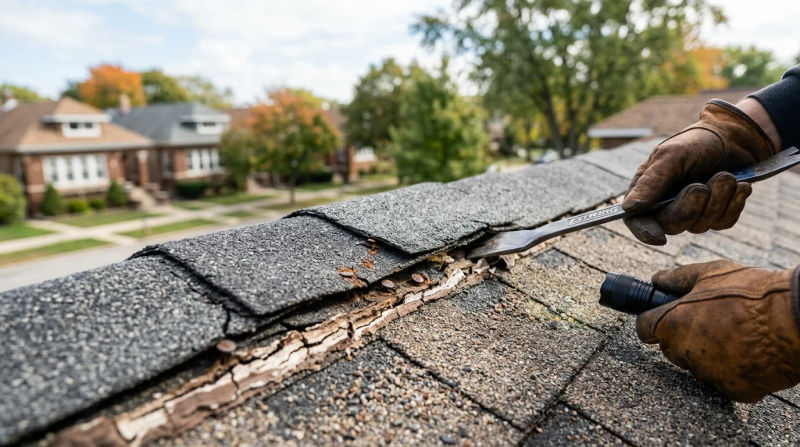
As a roofing specialist with over 14 years of experience here in Chicago, I've seen how a seemingly calm September can quickly expose hidden vulnerabilities in a home's roof. You might be out doing some fall yard cleanup after a gusty day and notice a few shingle granules near your downspout, or maybe a piece of a shingle on the lawn. It’s easy to dismiss these as minor, but they are often the first whispers of a significant problem brewing at the highest point of your home: the ridge cap.
The ridge cap is the specialized layer of shingles that covers the peak of your roof, where two slopes meet. It’s your roof’s primary defense against wind, rain, and snow trying to penetrate from the top. When it fails, the entire system is compromised. With winter’s snow loads and ice dams just around the corner, early fall is the critical window to identify and address these issues before they become costly emergencies.
Common Signs and Symptoms
A thorough Chicago ridge cap inspection involves more than a quick glance from the ground. Our trained technicians know that the most subtle signs often indicate the biggest future problems. Here are the key indicators we look for that signal your ridge caps may be failing.
- Lifting or Loosening Shingles: This is one of the most common ridge cap shingles lifting signs. After a period of high winds, take a look at your roof’s peak. Do any of the cap shingles appear raised, curled, or slightly detached? The adhesive strip underneath can fail over time, and wind can get under the shingle, loosening the nails and creating a funnel for water.
- Cracked, Broken, or Missing Shingles: This is an obvious red flag. Exposure to Chicago’s dramatic temperature swings causes asphalt to become brittle. A cracked shingle is a water channel waiting to happen, and a missing shingle is an open invitation for a major leak.
- Exposed or Rusted Fasteners: The nails holding your ridge caps down are a common failure point. If they were installed too high, they don't properly secure the shingle. If they were driven too deep, they can create a divot that collects water. You might see nail heads popping up or streaks of rust running down the roof, which indicates water is getting to the fastener - a clear sign of ridge cap damage.
- Dark Stains or Water Marks: Check the underside of your roof overhangs (the soffit and fascia). Dark streaks or discoloration here often point to a leak higher up on the roof. Water can get under the ridge cap, run down the length of the decking, and find its exit point at the roof's edge. These are classic roof ridge leak symptoms after wind and rain events.
- Excessive Granule Loss: Those sand-like granules on your shingles protect the underlying asphalt from UV rays. If you see an accumulation of them in your gutters or on the ground below the roofline, it means your ridge caps are aging and deteriorating. The exposed asphalt will break down much faster.
- Interior Ceiling Stains: The most unwelcome sign is evidence of a leak inside your home. A yellow or brown stain on the ceiling of your top floor, especially after a storm, is a late-stage symptom. The leak has already penetrated the roof deck, insulation, and drywall. The source is very often a compromised ridge cap.
- Visible Gaps or Misalignment: From a safe vantage point, look along the ridgeline. It should be a straight, uniform line. Any visible gaps, dips, or shingles that look out of place suggest improper installation or shifting due to weather. This is particularly critical for the complex, intersecting rooflines found on many 1970s-era split-level and bi-level homes common in suburbs like Tinley Park. Each additional ridge is another potential point of failure.
What Causes This Problem
Understanding what causes ridge cap failure can help you appreciate why professional repair is so important. It's rarely just one thing, but a combination of factors.
- Age and Material Fatigue: Most asphalt ridge caps have a lifespan of 15-25 years. As they age, they lose their flexibility, the sealant breaks down, and they become brittle. Chicago's intense summer sun and harsh winters accelerate this process.
- Improper Installation: This is a leading cause of premature failure. Common mistakes we see include using the wrong type or length of nails, incorrect shingle overlap, or failing to use a starter strip. Our standardized processes ensure every fastener is placed correctly and every shingle is properly sealed for maximum wind resistance.
- Extreme Weather: Chicago is no stranger to high winds. Gusts can lift shingles, breaking the sealant bond and loosening fasteners over time. Heavy, wind-driven rain then forces water into these newly created gaps. The subsequent freeze-thaw cycle in late fall and winter is especially damaging; water in a tiny crack freezes, expands, and turns a small gap into a significant breach.
- Complex Roof Architecture: Homes from the 1970s suburban boom often feature multiple gables and intersecting rooflines. While architecturally interesting, these designs create more ridgelines and valleys. Each ridge needs a properly installed cap, increasing the number of potential failure points on the roofing system.
When to Call a Professional
While it might be tempting to try a DIY fix with a tube of roofing cement, this often does more harm than good. Sealing over a failing shingle can trap moisture and mask a deeper problem.
Safety is the primary concern. Walking on any roof is dangerous, but the steep pitches and multi-level designs of many homes in our area make it especially hazardous without the proper safety equipment and training. Beyond safety, there are several reasons to call for a professional Chicago ridge cap inspection.
An experienced professional can distinguish between a simple repair and a symptom of a larger issue. They can assess the condition of the underlying decking and ventilation system, which are often impacted by ridge cap failures. Our technicians are trained to identify not just the obvious ridge cap damage, but also the subtle signs of improper installation or widespread material fatigue that a homeowner would miss.
A professional repair isn't just a patch. It involves removing the damaged shingles, inspecting the wood decking beneath, installing new underlayment if needed, and then correctly installing new ridge cap shingles with the right fasteners and sealing methods to ensure a long-lasting, watertight solution. This is a workflow that requires experience and precision.
Conclusion
Your roof’s ridge cap is a small but mighty component of your home's overall defense system. The subtle signs of failure - a few granules in the gutter, a slightly lifted shingle - are your early warnings. Ignoring them, especially during the fall, is a gamble against Chicago’s winter weather.
By being proactive and addressing these issues now, you can prevent small problems from turning into major leaks, interior damage, and emergency repairs in the dead of winter. Take a moment this fall to look for these warning signs.
If you notice any of these signs, contact a local roofing professional for an inspection. An expert assessment can provide peace of mind and a clear plan to ensure your roof is secure for the seasons ahead.